

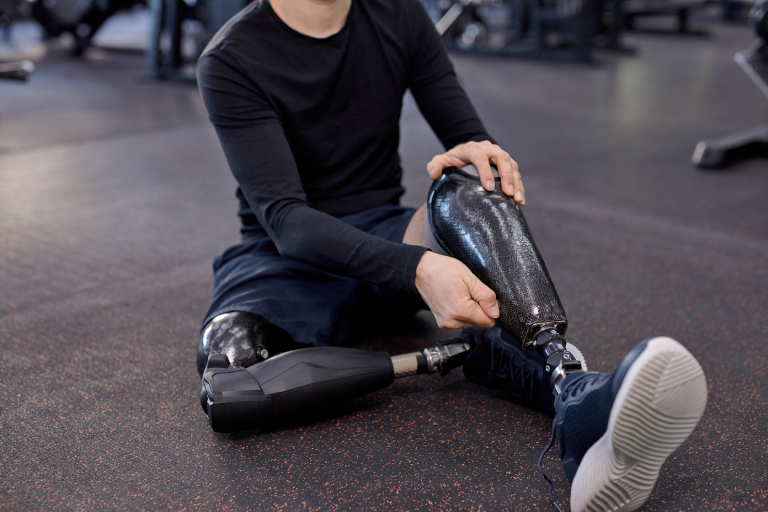

Artificial intelligence (AI) is transforming rehabilitation by making prosthetic devices smarter, more responsive, and tailored to individual users. AI-powered prosthetics go beyond simple mechanical support, enabling more natural movement, faster recovery, and improved quality of life for patients recovering from limb loss or injury.
Adaptive control and movement prediction are at the heart of AI-powered prosthetics. Sensors embedded in the device detect muscle signals, joint angles, and motion patterns, while AI algorithms interpret this data to predict user intent. This allows the prosthetic to respond in real time, creating smooth, intuitive movements that closely mimic natural limb function.
Personalized rehabilitation programs are enhanced by AI integration. Prosthetics can track performance metrics such as walking speed, grip strength, and range of motion. Therapists can use this data to design tailored exercises, monitor progress, and adjust therapy in real time. The result is a more effective rehabilitation process that accelerates recovery and improves long-term outcomes.
Reducing user fatigue and strain is another major advantage. AI-powered prosthetics adjust resistance and movement patterns based on the user’s strength and activity level. This minimizes overexertion, reduces the risk of injury, and allows patients to engage in daily activities or exercise for longer periods without discomfort.
Enhanced sensory feedback is becoming a reality. Some AI prosthetics incorporate haptic feedback or pressure sensors, giving users a sense of touch, force, or balance. This feedback improves motor control, coordination, and confidence, enabling users to perform delicate tasks and navigate complex environments more safely.
Remote monitoring and tele-rehabilitation further enhance patient outcomes. Many AI prosthetics can transmit data to clinicians, allowing for remote monitoring of progress and adjustments without requiring frequent clinic visits. This is particularly beneficial for patients in rural or underserved areas, ensuring consistent and effective rehabilitation.
Motivation and engagement are improved with AI-driven adaptive learning. Prosthetics can challenge users gradually, adapting difficulty based on performance and encouraging continuous improvement. Gamified feedback and progress tracking keep patients motivated, leading to higher adherence and better overall results.
Future trends include deeper integration with neural interfaces, where prosthetics respond directly to brain signals for even more natural control. AI will also enable predictive maintenance, ensuring devices function optimally, while continued advancements in lightweight materials and energy efficiency make prosthetics more comfortable and practical for everyday use.




Leave a Comment